Chapter IV — The Invisible Noise of Everyday Life
Maxime GuengantThe Silence That No Longer Exists
There is a type of fatigue that we don't hear. A fatigue that doesn't come from noise... but from what fills all the space between the noises.
One might think that silence is still accessible. That all one needs to do is stop. Cut off. Withdraw.
But even in calm, something continues. A background. A slight tension. Invisible activity.
The modern world doesn't make so much noise. It mainly prevents silence from existing.
This chapter talks about that noise: the one that isn't heard, but which distances us from ourselves.
Noise is no longer just auditory
When we think of noise, we immediately think of sounds: the city, engines, voices, notifications.
But today, noise has changed its nature. It has become more subtle, more constant, harder to identify.
Researchers speak of cognitive background noise: a low but permanent stimulation, which goes unnoticed but causes fatigue.
This noise is not a sound. It is a density.
A density of things to process. A density of signals. A density of information.
This noise is not measured in decibels. It is measured in mental load.
Constant Visual Noise
Our eyes almost never find stable rest anymore.
Every surface has become:
- a screen
- an interface
- an image
- a stream
- movement
Even stillness has become dynamic: one image hides another, one content replaces another, a notification pops up in a corner.
The gaze no longer has a natural stopping point.
Visual neuroscience shows that the brain needs visual rest areas to stabilize perception. Without these areas, it remains in a state of permanent analysis.
This explains:
- eye strain
- difficulty concentrating
- a feeling of inner restlessness
- loss of depth in one's gaze
Visual noise is not aggressive. It is continuous. And that is precisely what makes it powerful.
Continuous Mental Noise
The deepest noise is not external. It is internal.
It is the permanent succession of short thoughts:
- what needs to be done next
- what has been forgotten
- what could be done better
- what needs to be answered
- what needs to be anticipated
The brain no longer truly rests between two actions. It remains active in the background.
Neuroscience calls this default mode network activity: a mode of functioning where the brain continues to process, even at rest.
This network is useful. But when overactive, it produces a form of mental noise that prevents presence.
Even in calm, the mind continues to race.
The Impossibility of Emptiness
Emptiness has become rare. And when it appears, it is often immediately filled.
By a screen. By a distraction. By an automatic gesture.
We have learned to avoid emptiness. As if emptiness were a threat. As if emptiness revealed something we do not want to see.
Yet, emptiness is essential.
It is in emptiness that:
- perception stabilizes
- emotions organize themselves
- the gaze clarifies
- thought deepens
- memory consolidates
Without emptiness, everything remains on the surface.
Emptiness is not a lack. It is a space.
The Brain and Invisible Saturation
Neuroscience describes a discrete but constant phenomenon: low-intensity sensory overload.
This is not a sudden overload. It is a slow accumulation.
Each stimulus is weak. But their repetition is permanent.
Result: the nervous system never fully returns to rest.
This invisible saturation explains:
- fatigue without apparent cause
- difficulty concentrating
- the feeling of being "full" without knowing why
- loss of patience
- decreased emotional sensitivity
Modern noise does not exhaust by intensity. It exhausts by continuity.
The False Sense of Calm
There is a very modern illusion today: the impression of being calm... while remaining stimulated.
Lying down. Sitting. Without apparent activity.
But with:
- a screen nearby
- active thoughts
- a latent flow of information
The body is still. But the mental system is not.
This calm is not rest. It is a pause in the flow. A pause that does not regenerate.
When Silence Becomes Uncomfortable
Real silence has become strange. Sometimes even uncomfortable.
Because it no longer contains immediate occupation.
It allows to surface:
- unfiltered thoughts
- raw sensations
- a more direct perception of reality
- a more naked presence
And in a world accustomed to flux, this can be surprising.
Silence is not empty. It is full of us.
Noise as Unconscious Protection
Modern noise is not only endured. It is also sometimes sought after.
Not for its quality. But to avoid silence.
Because silence imposes a presence. And presence requires effort.
It's easier to stay in the flow. Easier to stay busy. Easier not to feel.
Noise then becomes an unconscious protection. A way to avoid depth.
The Erosion of Fine Perception
In a saturated environment, perception changes. It becomes global. Fast. Simplified.
We no longer distinguish nuances. We recognize wholes. General impressions.
But the details disappear.
And with them:
- depth of gaze
- emotional subtlety
- the ability to feel fully
- the finesse of presence
Fine perception is a muscle. Without silence, it atrophies.
Nature as Sensory Reset
Facing this saturation, certain environments have a particular effect.
Nature is one of them. Not because it is "beautiful". But because it is non-saturating.
It offers:
- slow transitions
- irregular shapes
- non-linear rhythms
- visual breathing spaces
- continuous but non-aggressive sounds
- light that varies gently
It does not overload. It rebalances.
Studies show that a few minutes in a natural environment are enough to:
- reduce cortisol
- stabilize attention
- decrease mental load
- improve fine perception
- reactivate emotional memory
Nature does not calm. It resets.
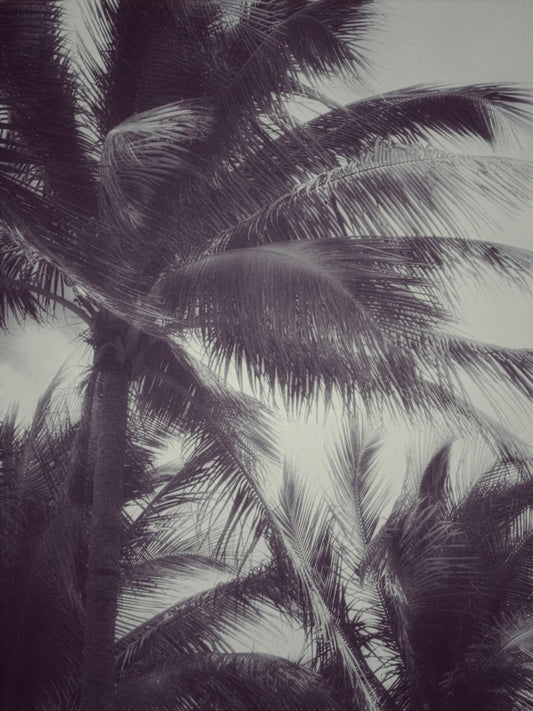
Photography as Constructed Silence
Contemplative photography can produce a similar effect.
It does not remove the world. It reduces its visible complexity.
It removes:
- movement
- noise
- distraction
- urgency
And in this reduction, something appears: visual silence.
This silence is not an absence. It is a quality of presence.
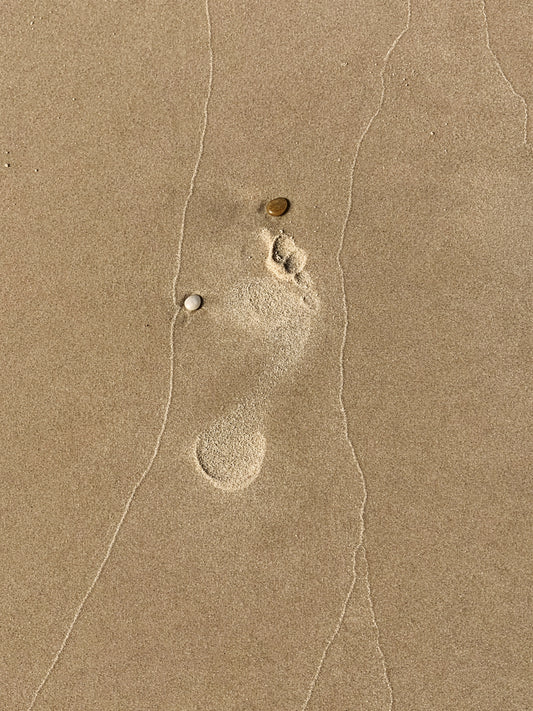
A contemplative photograph is a space where the gaze can rest. A space where the world ceases to make noise.
Silence as an Active Experience
Silence is not emptiness. It is availability.
A space where the gaze can:
- settle
- expand
- breathe
- linger
- meet
Silence is not passive. It is active.
It allows the world to enter. It allows emotion to stabilize. It allows perception to deepen.
Silence is a form of listening.
SouldlroW: Creating Spaces Without Noise
SouldlroW's images do not seek to add something to the world. They seek to remove the noise from it.
They don't show more. They show less.
But this "less" is not a reduction. It is an opening.
An opening towards a slower perception. More stable. Quieter.
Each photograph is conceived as a habitable mental space. A place where the gaze can finally rest. A place where the world ceases to make noise.
Finding a Habitable Mental Space
We do not lack the world. We lack the space to receive it.
Modern noise hasn't replaced silence. It has covered it.
But beneath this covering, silence still exists.
And sometimes, all it takes is an image. A light. A landscape. To hear it again.
At SouldlroW, every photograph is conceived this way: not an image in the world, but a space where the world stops making noise.