Chapter II - The world has never moved so fast
Maxime GuengantThe feeling of a world that never stops
There's a particular kind of tiredness that isn't immediately noticeable. A fatigue that doesn't come from the body, nor from lack of sleep, nor from physical exertion. It comes from the pace.
We wake up already in a flow. Even before our eyes open, the world is moving. Thoughts start without us. Screens await us. Notifications call us. Images stream past us. Decisions press upon us.
Everything starts fast. And nothing really slows down.
There's no longer a threshold between rest and activity. No gentle transition. Only an accelerated continuity.
In this constant movement, a silent question arises: How fast can one live before no longer truly feeling what one is living?
This question isn't theoretical. It's physical. It's emotional. It's internal.
It touches upon our way of inhabiting the world.
The invisible acceleration of daily life
We often believe that speed belongs to machines: to transportation, to screens, to tools.
But speed has moved elsewhere. It has entered our way of thinking.
We no longer do things one by one. We chain them together.
Read. Reply. Observe. Decide. Move on.
Each action becomes a transition to the next. The present is no longer inhabited. It is traversed.
We no longer live in time. We live in transition.
And in this transition, something is lost: the depth of the moment.
The human brain hasn't changed its rhythm
The paradox is simple. Our environment has accelerated. But our biology remains the same.
The human brain still operates with slow cycles:
- stable attention
- progressive assimilation
- necessary recovery
- cognitive rest
For thousands of years, this rhythm was sufficient. Because the outside world respected this tempo.
Today, that's no longer the case.
The brain is solicited like a fast machine. But it functions like a slow structure.
We live in a permanent contradiction: a fast world, a slow mind.
And this contradiction is tiring.
Modern cognitive overload
Neuroscience speaks of cognitive overload when information exceeds the brain's processing capacity.
But in reality, it looks like something else.
It looks like:
- starting a task and changing it before finishing it
- reading without retaining
- looking without memorizing
- thinking without stable depth
- being present without being fully there
It's not a breakdown. It's a gradual saturation.
A saturation that makes no noise. A saturation that isn't seen. A saturation that slowly settles in.
Like an internal fog.
The false sense of efficiency
Speed gives an illusion: the illusion of progress.
The more we chain things together, the more productive we feel. But this productivity is often horizontal.
It displaces. It doesn't build.
It fills. It doesn't dig.
And in this permanent displacement, something disappears: depth.
We do more. We feel less.
The world as a continuous flow
Modern platforms have transformed our relationship with the world. Everything has become a flow.
Flow of images. Flow of texts. Flow of thoughts. Flow of rapid emotions.
Nothing stops. Nothing settles.
Even landscapes become content. Even moments become sequences. Even emotions become data.
The world is no longer contemplated. It is consumed.
And what is consumed quickly is not retained.
When speed prevents memory
Memory does not function in speed. It functions over time.
For a memory to take root, it must linger for a moment. It must be inhabited. It must be experienced.
But in a fast world:
- experiences no longer take root
- images replace each other
- sensations overlap
We remember less of what we saw than of what we passed through without staying.
Speed erases. Slowness imprints.
The need for slowness is not a luxury
We often speak of slowness as an aesthetic choice. Or a comfort.
But in reality, it's a biological need.
The nervous system needs phases of:
- recovery
- stabilization
- absence of stimulation
- continuity
Without it, it remains in a permanent state of slight alert.
It's not visible. But it is felt.
Slowness is not a refuge. It is a necessity.
Nature as a counter-rhythm
In this context, nature is not just a setting. It represents another rhythm.
A rhythm that is:
- unfragmented
- unhurried
- not geared towards an immediate goal
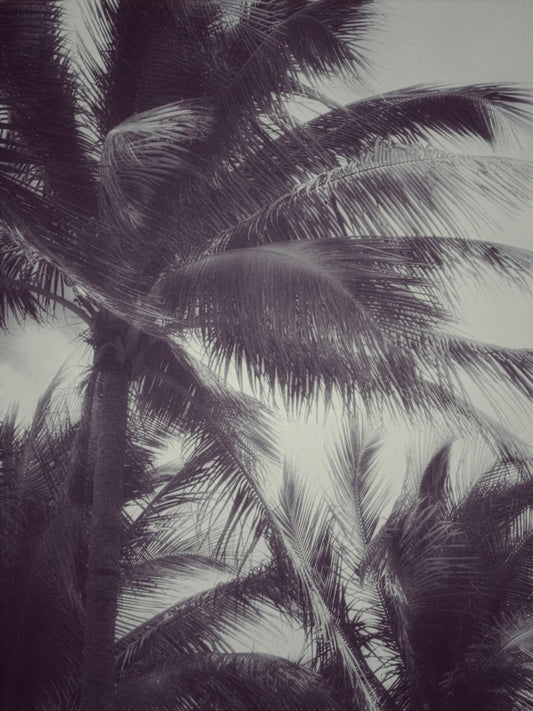
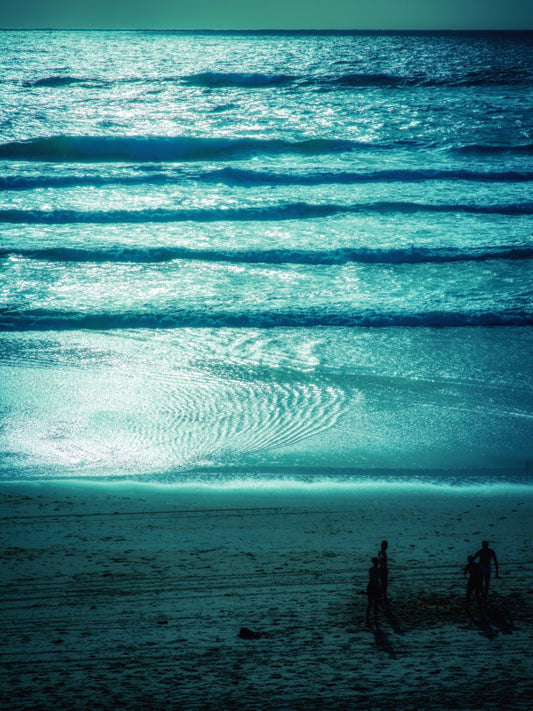
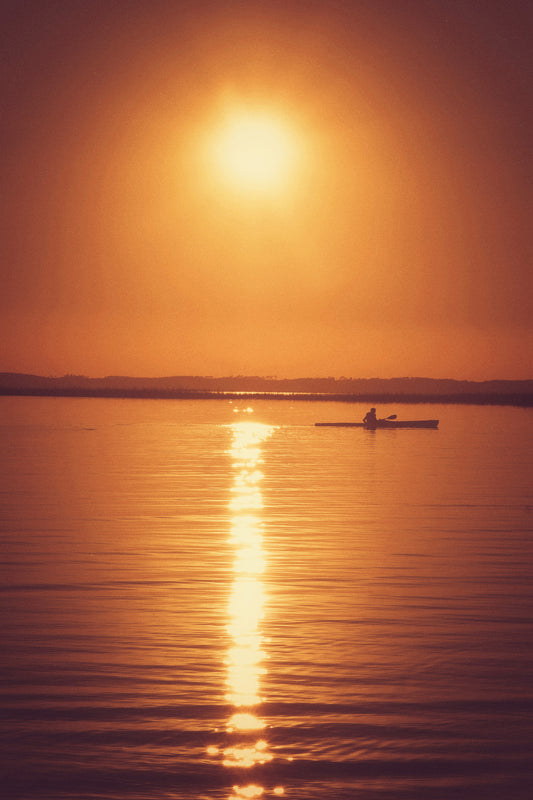
A wave doesn't rush. Light doesn't hurry. A peaceful landscape doesn't seek attention.
It simply exists.
And this simple existence is enough to rebalance something within us.
Nature doesn't slow down. It brings us back to our natural speed.
Why certain images slow down time
Certain photographs produce a particular effect. They don't immediately capture the gaze. They stretch it.
We don't understand them in a second. We linger on them.
These are often images where:
- there is space
- there is visual silence
- there is little tension
- there is soft light
The gaze has nowhere to flee. So it settles.
And in this settling, something transforms. Time dilates. The rhythm calms. The world becomes habitable again.
The role of photography in a fast world
Contemporary photography is often fast. It must attract. Surprise. Captivate.
But contemplative photography does the opposite.
It slows down. It removes rather than adds. It simplifies rather than overloads.
It doesn't say: look at me quickly. It says: stay a while.
It doesn't seek to impress. It seeks to soothe.
The slow gaze as resistance
Looking slowly today becomes a rare act. A voluntary act. An almost political act.
In a fast world, slowing down is not natural. It's a choice.
And this choice transforms perception.
What was an image becomes a space. What was an instant becomes a presence. What was a backdrop becomes an inner place.
SouldlroW and the suspension of rhythm
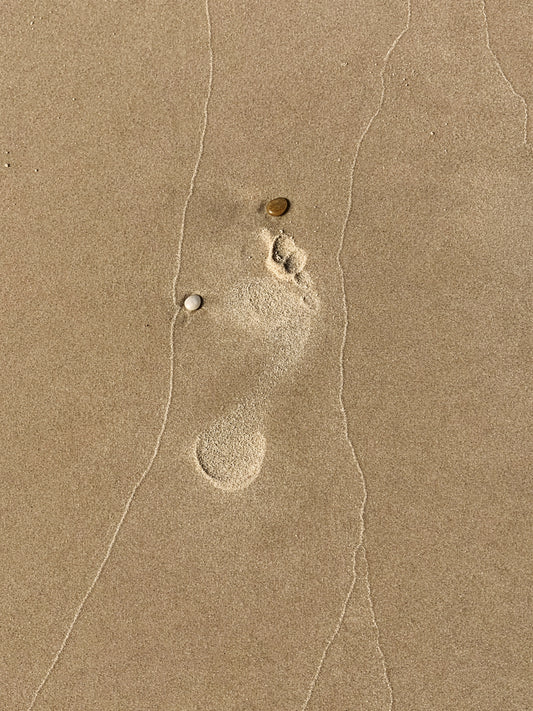
SouldlroW's images don't seek to accelerate the gaze. They seek to gently stop it.
They offer:
- lights that don't rush
- landscapes that breathe
- moments without urgency
- compositions that leave room to breathe
- visual silences that soothe
They don't want to be seen quickly. They want to be inhabited.
They don't seek to capture the world. They seek to restore its natural tempo.
Returning to a human pace
The world may not have changed its nature. It has changed its speed.
And in this acceleration, something has become desynchronized: the inner rhythm.
Slowing down is therefore not going backward. It's finding a habitable tempo again.
Contemplative photography doesn't correct the world. It simply reminds us that another rhythm still exists.
In this space between speed and silence, certain images naturally prolong this sense of pause.
They don't try to immediately capture the gaze. They invite it to stay.
👉 Explore contemplative works
SouldlroW / Fine Art Prints Collection
🔗 Continue Reading
- Chapter I — Why Did We Stop Looking?
- Chapter III — We See Without Seeing
- Pillar Page — The Soul of the World