Chapter III — We see without seeing
Maxime GuengantThe Invisible Obvious
There are moments when the world is there, perfectly present, perfectly visible. Shapes are sharp. Colors exist. Light falls with an almost tender precision.
And yet... nothing happens.
It's not an absence. It's an absence of encounter.
We pass through things as one passes through a clean pane of glass: without shock, without stopping, without friction. Reality glides over us like water on a smooth surface.
And perhaps this is the strangest thing: We see everything... without truly looking at anything.
This chapter speaks of this silent disappearance. Of this imperceptible slide that transforms our gaze into a mere passage. Of this distance that settles between the world and us—without us even realizing it.
Seeing has become a reflex, not an act
Seeing is one of the most automatic gestures of the human body. Eyes open, and the world enters. Effortlessly. Without decision.
But looking is something else.
Looking implies a suspension. A slowing down. A form of silent agreement with what is being observed. An inner availability.
Today, this agreement is rare.
We no longer truly decide to look. We register. We browse. We skim.
We are no longer in vision. We are in transit.
The modern eye has become a tool of passage
In the contemporary world, the eye is no longer an organ of contemplation. It is an organ of navigation.
It scans. It sorts. It selects. It passes.
Every image becomes a step. Every scene becomes a fragment. Every landscape becomes content.
The gaze no longer inhabits things. It passes through them.
We no longer look to understand. We look to continue.
The illusion of presence
The paradox is subtle. We are surrounded by images—more than ever in human history. And yet, we are less and less present before them.
An image is seen. But rarely inhabited.
It is recognized in a fraction of a second. Then immediately replaced by the next.
The brain registers. But it does not linger. It does not anchor itself. It does not encounter.
We live in a familiarity without presence.
The disappearance of viewing time
Truly looking requires time. Not a long time. But stable time.
However, this stable time has disappeared.
Everything has become:
- fast
- fragmented
- interruptible
- replaceable
Even the most beautiful moments no longer benefit from duration. They are consumed like others.
Beauty no longer has time to be received. It is simply passed through.
What neuroscience teaches us about looking
Cognitive neurosciences show that the brain does not process an image as simple visual data. It reconstructs it.
But this reconstruction requires a minimum of attentional continuity.
Without continuity:
- perception remains superficial
- memory does not anchor itself
- emotion does not stabilize
So we don't see less. We see faster than we can integrate.
The modern gaze is a saturated gaze. A gaze too fast to be deep.
Seeing without seeing: a modern phenomenon
There is a particular state of the modern gaze. An intermediate state.
We recognize what we see. But we do not encounter it.
It is a world of familiarity without presence. A world where we know what we are looking at... but where we do not feel it.
We live in vision without emotion. In perception without depth.
When the gaze becomes automatic
The automatization of the gaze is subtle. It is not noticed. It settles in.
One starts by:
- scrolling quickly
- moving from one image to another
- no longer dwelling on details
Then one day, everything becomes equivalent.
A sunset image, an advertisement, a landscape, a text...
Everything passes at the same level of perception.
The gaze loses its hierarchy. It loses its sensitivity. It loses its ability to distinguish what deserves to be inhabited.
The loss of detail
Truly looking means entering into detail. Detail slows down. Detail stops. Detail forces one to stay.
But in a fast world, detail disappears.
Things become global. Instantaneous. Simplified.
And with that, something disappears: the depth of perception.
Detail is what transforms an image into an experience. Without detail, everything becomes surface.
Attention as an act of resistance
Truly looking then becomes an almost voluntary act. A choice.
Choosing not to move on. Choosing to stay. Choosing to truly see.
This gesture is simple. But rare.
And in this gesture, something reactivates: presence.
Looking becomes a form of gentle resistance. A way to reconnect with reality. A way to rediscover one's own inner rhythm.
Photography as a re-education of the gaze
Some photographs are not consumed. They slow down. They subtly block the flow.
They force us to:
- return
- observe
- feel
They reintroduce what the modern world has fragmented: the time to look.
They do not seek to capture the world. They seek to make it habitable.
The role of contemplative images
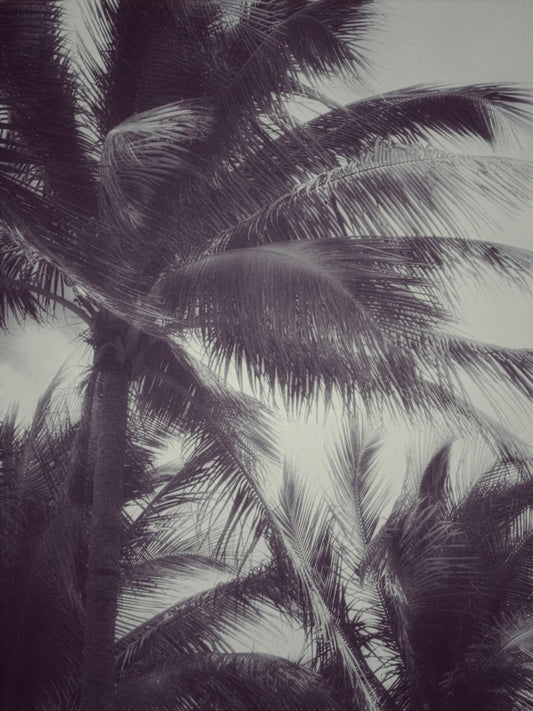
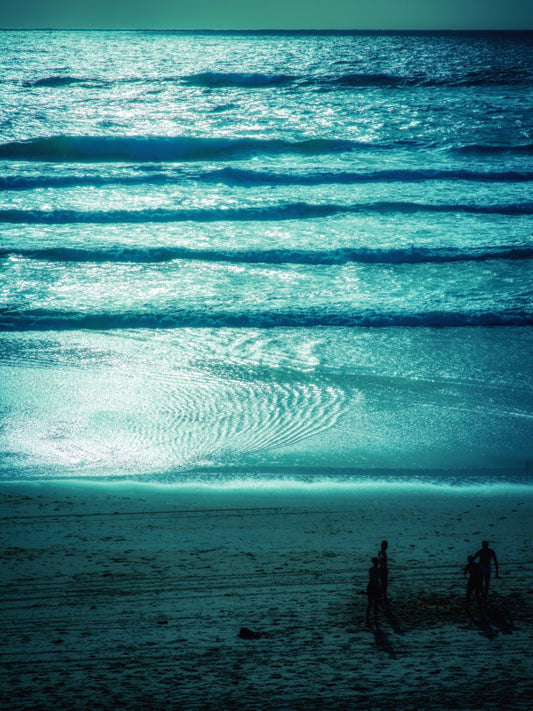
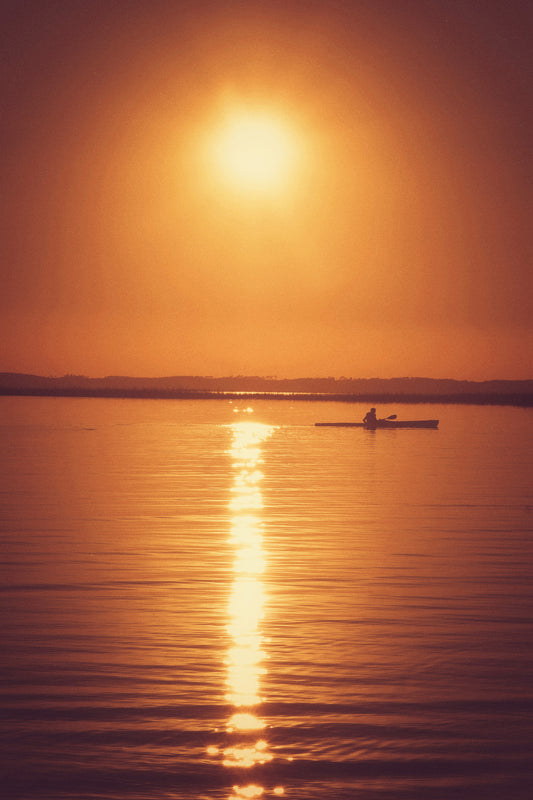
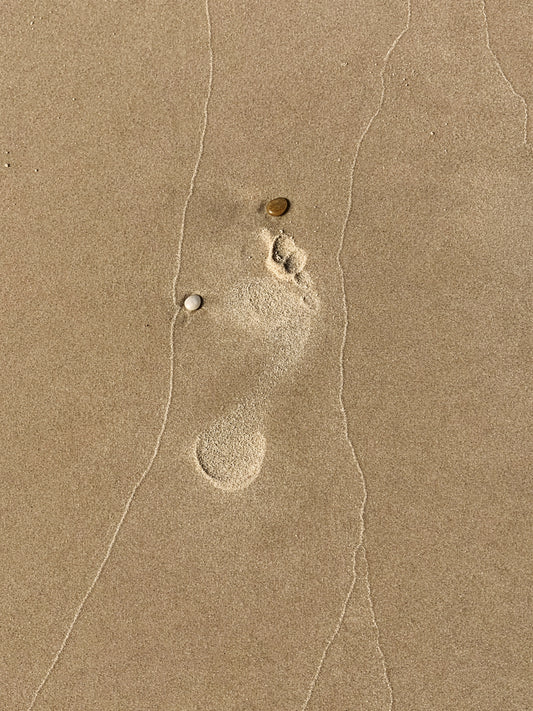
Contemplative images do not seek to impress. They seek to stabilize.
They create a space where the gaze:
- stops fleeing
- stops searching
- stops passing by
And in this space, something reorganizes itself.
The gaze regains its depth. The world regains its presence. The image regains its role: that of a passage to an inner state.
SouldlroW: slowing down the gaze to regain presence
SouldlroW's images do not demand immediate interpretation. They demand time.
They are not designed to be understood quickly. They are designed to be felt slowly.
They offer a simple experience: stay a little longer than usual.
And in this “a little longer,” something changes.
The gaze settles. The world opens up. Presence returns.
Relearning to see
We don't see less because the world has become invisible. We see less because we have learned to pass by too quickly.
Truly seeing is not a gift. It is a practice.
A practice that speed has weakened. But not destroyed.
Some images can still awaken it. Some lights. Some landscapes. Some photographs.
At SouldlroW, every photograph is conceived this way: not an image to look at, but a gaze to rediscover.
Extend this reflection
Some photographs invite us to do exactly what this chapter evokes: slow down, observe, and let the gaze settle.
Discover the works of photographer Maxime Guengant on SouldlroW inspired by this contemplative approach in the Fine Art Prints collection.