Chapter I — Why Have We Stopped Looking?
Maxime GuengantWhat we no longer see
There are days when the world seems untouched.
Light glides over things with an almost ancient softness.
Colors breathe as if remembering something.
The wind slows, as if not to disturb the scene.
Everything is there, available, offered, present.
And yet, we miss it.
We pass through these moments as one passes through a familiar room:
without looking up, without listening, without truly being there.
The world continues to speak to us, but our gaze no longer responds.
It has grown accustomed to speed, density, urgency.
It has grown accustomed to not seeing anymore.
We look, but we no longer truly see.
This paradox has become normal.
Almost comfortable.
We live surrounded by images, landscapes, faces, light. And yet, a form of gentle blindness has set in.
Not an absence of vision.
But an absence of presence.
This chapter begins here:
At what point did we stop looking at the world?
The world has never been so visible… and yet less seen
Never in human history have we been exposed to so many images.
Thousands every day.
Continuous streams.
Landscapes, faces, scenes, lights.
Everything is available.
Everything is accessible.
Everything is visible.
And yet, something has reversed.
The more images there are, the less we look.
The gaze has become a surface of passage.
One image chases another.
None remains.
None takes root.
The human brain was not designed for this visual density.
For millennia, looking was a slow act.
Observing a landscape required time.
A face required attention.
Light required a pause.
Today, the gaze is fragmented.
It no longer settles.
It glides.
Attention: a resource we unknowingly depleted
Cognitive neuroscience researchers describe attention as a limited resource.
It functions like energy. And like all energy, it can be saturated.
It gets tired.
It disperses.
It gets depleted.
Psychologist Stephen Kaplan distinguished two forms of attention:
- directed attention (that which we control)
- involuntary attention (that which settles naturally)
The problem with the modern world is simple:
we use the first constantly.
Notifications.
Messages.
Decisions.
Information.
Solicitations.
The brain remains in constant tension.
In this state, looking at a landscape becomes difficult.
Not because the landscape has changed.
But because we are no longer available to receive it.
We don't lack vision.
We lack availability.
We see without looking
There is a fundamental difference between seeing and looking.
Seeing is automatic.
Looking is an act.
We see:
- a sunset as a screensaver
- a photo while scrolling
- a light on a window
- a forest in a video
But we don't stay.
We don't let the image in.
We don't let the world touch us.
Looking, on the contrary, implies:
- slowing down
- suspending
- absorbing
- allowing to last
And this gesture has become rare.
Almost archaic.
The invisible noise of everyday life
We often think the problem is audible noise.
But the most significant noise is elsewhere.
It's visual noise.
Every modern day contains:
- bright screens
- moving interfaces
- fast texts
- permanent transitions
- constant changes of focus
The brain never has stable visual rest.
This noise doesn't cause immediate fatigue.
It accumulates.
And it produces a form of slow saturation.
A fatigue without an identifiable cause.
A loss of sensitivity.
We are not exhausted by the world.
We are exhausted by what distances us from it.
When the world becomes too fast to be looked at
The human gaze operates at a natural rhythm.
It needs continuity.
Slowness.
Silence.
But the modern world operates by interruption.
Result:
We are beginning to lose the capacity for contemplation.
Not because we've forgotten how.
But because we no longer stay long enough in the same visual place for something to happen.
Contemplation is not a talent.
It is a duration.
Silence as a form of resistance
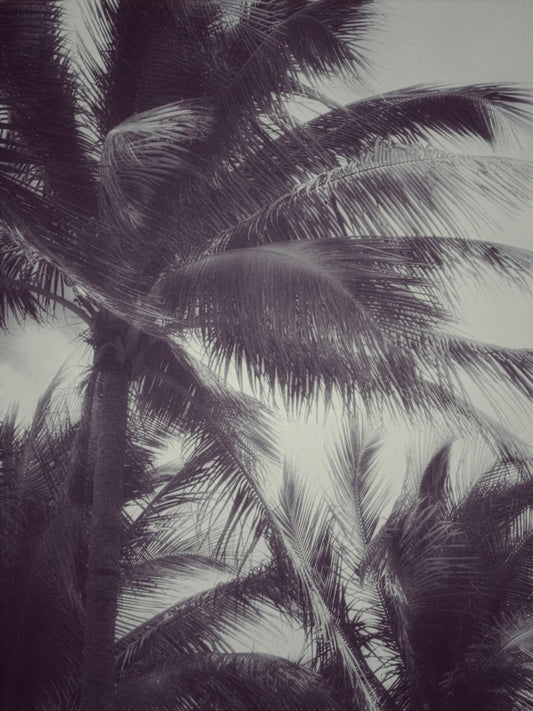
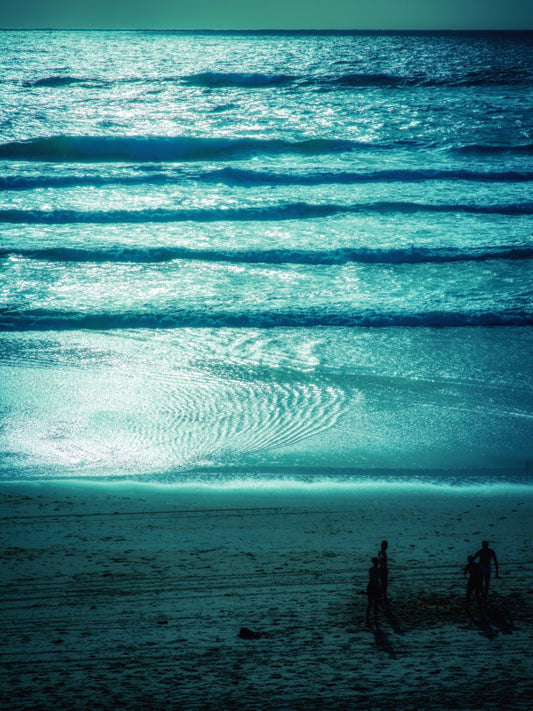
Yet there are images that resist this fragmentation.
Images that force us to slow down.
Images that are not consumed.
Images that do not seek to impress.
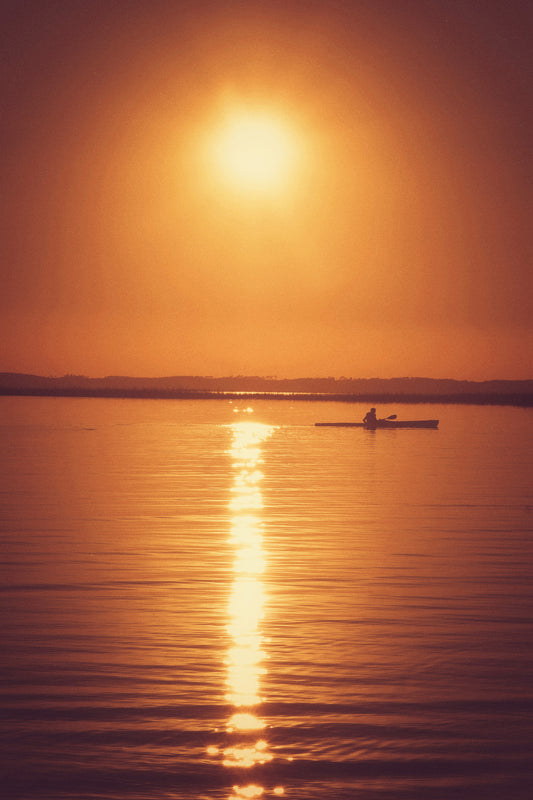
A still water surface.
A soft light on a calming landscape.
A mist that blurs the contours.
A scene without tension.
These images create a peculiar phenomenon:
The gaze stops wanting to move on.
It stays.
It lingers.
It breathes.
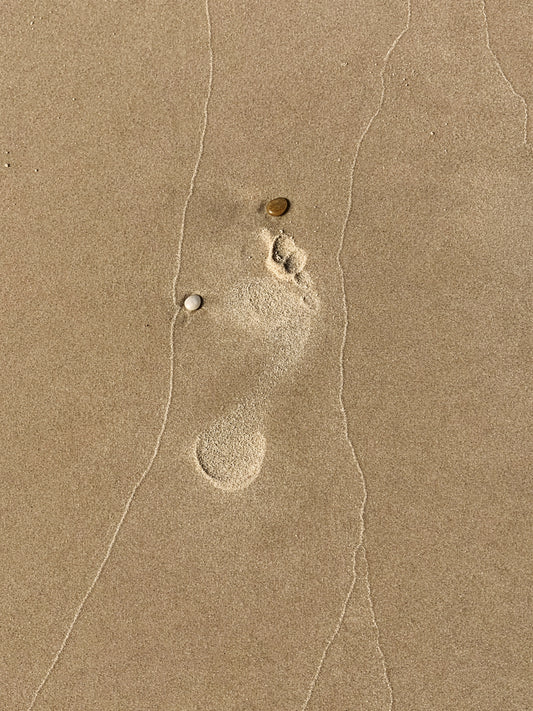
This is exactly what SouldlroW seeks.
Not to produce spectacular images.
But to produce spaces of slowing down.
Images that do not decorate.
Images that soothe.
Images that restore the world to itself.
Looking as a forgotten act
Looking today requires an effort.
An almost counter-cultural effort.
In a world of flux, stopping becomes a decision.
A resistance.
A choice.
And yet, it is in this stopping that something happens.
An image ceases to be an image.
It becomes a state.
A memory.
A presence.
The role of photography in this shift
Photography, at its origin, was not a flux.
It was a suspension.
A fragment of isolated time.
A photograph naturally compels what the modern world has lost:
- duration
- stopping
- concentration
But not all photographs produce this effect.
Only some do.
Those that do not seek to show.
But to make one feel.
Those that do not seek to capture.
But to reveal.
The photographer's gaze
Photographing, from this perspective, is not about capturing.
But about recognizing.
Recognizing a moment when the world becomes legible in a different way.
An instant when:
- light changes perception
- silence becomes visible
- time seems to expand
- space breathes
It is in these moments that the images of photographer Maxime Guengant are born.
Photographs that do not seek to prove.
But to open.
To soothe.
To reconnect.
Why some images force us to slow down
There are photographs that cannot be skimmed quickly.
They resist.
They hold.
They invite.
They slow the gaze effortlessly.
These are often:
- simple landscapes
- minimalist compositions
- soft lights
- tension-free scenes
The brain finds no immediate exit point.
So it stays.
And in this remaining, something transforms.
The gaze becomes a place again.
The world becomes a presence again.
The image becomes a passage again.
Returning to the world
Perhaps we haven't lost the ability to look.
Perhaps it's simply covered.
Covered by:
- speed
- overload
- habit
- automatism
But certain moments awaken it.
A landscape.
A light.
An image.
And sometimes, that is enough.
Relearning to see
We haven't stopped looking because the world has become invisible.
We've stopped looking because we've become rushed.
And in this speed, something essential has faded: availability.
Photography, when contemplative, does not just show the world.
It returns us to it.
At SouldlroW, every image is conceived this way:
Not a representation of the world, but an invitation to return to it.
An invitation to slow down.
To breathe.
To feel.
To inhabit the light.
🌟 To continue this chapter: discover works that slow the gaze
→ SouldlroW Fine Art Prints Collection Contemplative images, soothing landscapes, natural light, nature-inspired wall art.