Chapter VI — Light is the World’s First Language
Maxime GuengantBefore words
Before words, there was light. Before ideas, images. Before structured thought, visual sensations.
Long before humans named the world, they saw it. And what they saw first was not the shape of things. It was their radiance.
Light has always been there. Changing, moving, elusive. And yet constant in its presence.
It describes nothing. It reveals everything.
This chapter discusses this primary truth: light is the world's first language.
Light as the first system for understanding reality
Long before language, the human brain learned to read light. It was its first survival tool.
Light indicated:
- the time of day
- the direction of danger or refuge
- the presence of water
- openings in the forest
- safe areas and unstable areas
Light was not aesthetic. It was informative. It was a language.
Anthropologists explain that early humans perceived the world as a succession of luminous atmospheres rather than a succession of objects. Light was the first map of the world.
It said: "Here, you can move forward." "There, you must be careful." "Over there, there's a livelihood."
Light was a guide before it was a beauty.
The human brain is still programmed by natural light
Even today, our perception remains profoundly influenced by it.
The nervous system still reacts to:
- light intensity
- light temperature
- subtle variations in contrast
- transitions between shadow and clarity
Unconsciously, we are constantly reading light.
It influences:
- our energy level
- our emotional state
- our ability to concentrate
- our feeling of security
Neuroscience shows that natural light synchronizes our biological rhythms: sleep-wake cycle, hormone production, stress regulation, emotional stability.
Light is not a decor. It is a regulator.
Light does not just illuminate the world, it structures it
We often think that light is only for seeing. But in reality, it organizes perception.
It creates:
- volumes
- depths
- visual hierarchies
- attention zones
Without light, there is no reading of the world. Only an indistinct presence.
Cognitive science shows that the brain does not first recognize objects: it first recognizes light contrasts.
Light is the first architecture of reality.
Why certain lights affect us immediately
There are lights that are not neutral. They trigger an immediate reaction.
A calming. A gentle emotion. A form of inner openness.
These are often:
- the low lights of morning
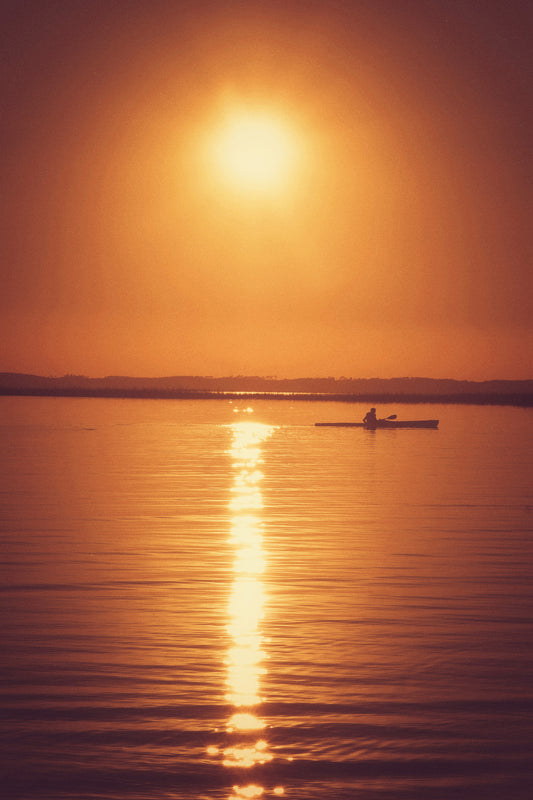
- golden ends of the day
- diffused light from an overcast sky
- soft backlighting in nature
These lights don't force anything. They accompany.
They resemble the environments in which humans have evolved for thousands of years. They speak a language that our body still understands.
Soft light as a language of security
Research in environmental psychology shows that diffused and natural lights are perceived as more calming.
Why?
Because they resemble original environments:
- forests
- clearings
- waterfronts
- open horizons
These light conditions unconsciously indicate: absence of immediate danger.
The body relaxes even before the mind understands why.
Soft light is a signal of security. An ancestral language.
Artificial light and the loss of natural landmarks
Conversely, modern environments are dominated by lights that are:
- flat
- constant
- without natural variation
- often too white or too uniform
These lights don't speak the same language. They inform, but they don't tell a story.
They allow us to see. But rarely to feel.
Neuroscience shows that artificial lights that are too intense or too cold increase:
- stress
- visual fatigue
- cognitive tension
- difficulty concentrating
Modern light illuminates. But it no longer connects.
Light as emotion even before the image
In human perception, light comes before form.
The brain receives:
- light intensity
- contrast
- color
and only then the recognition of objects.
This means that light is already an emotion before it is information.
It sets the stage for feeling. It colors the experience even before the image exists.
Light is a primitive emotion.
Photography as writing with light
Photography, at its deepest level, is not about capturing objects. But about writing with light.
Each image is:
- a luminous tension
- a balance of shadows
- an organization of the visible
- a visual breath
Photography is therefore less a representation of the world than a translation of light into emotion.
A photographer does not capture reality. They capture how light reveals it.
Why some images "breathe"
Some photographs give a sense of breathing. They are not necessarily spectacular. But they seem open.
This often comes from:
- balanced luminous spaces
- soft contrasts
- absence of visual overload
- natural circulation of light
The gaze can enter effortlessly. It can move there. It can rest there.
An image that breathes is an image that leaves room for the world. And therefore for the viewer.
Light as emotional memory
We are not always aware of it, but we retain a memory of light.
Certain luminous atmospheres remain with us:
- light of a particular morning
- ray passing through a window
- reflection on the water
- shadow in a forest
These memories are not precise images. They are luminous states.
Light is a memory before it is a scene.
The photographer as a reader of light
From this perspective, the photographer is not just one who captures. They are one who reads.
They read:
- subtle variations
- invisible transitions
- moments when light becomes language
- moments when the world opens up
And they try to translate them into a stable image.
To photograph is to recognize a moment when light speaks.
SouldlroW: light as the soul of the world
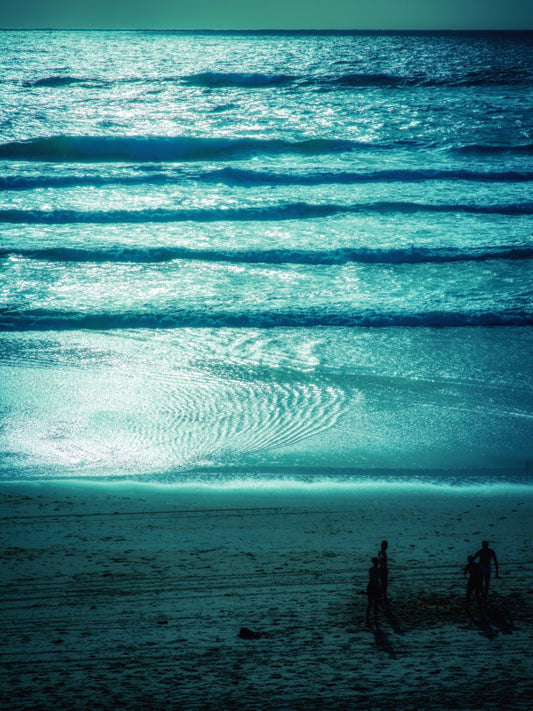
In SouldlroW, light is not just another element. It is the main subject.
Each photograph seeks to reveal:
- a quality of light
- a state of the world
- a silent emotion
- a subtle presence
These are not scenes. They are suspended luminous moments.
Light is the soul of the world. And SouldlroW tries to make it visible.
Why light connects us to something greater
Light transcends the objects it illuminates. It connects everything it passes through.
It never stops. It circulates. It unites.
Perhaps that is why it touches us so deeply: it gives the impression that the world is still a single coherent movement.
Light is a connection. An invisible thread. A continuity.
It connects us to the world. And sometimes, it connects us to ourselves.
Reading the world differently
Light is not just what makes the world visible. It is what makes the world readable.
It is the first language we learned without words. And perhaps the one we still understand best, without knowing it.
At SouldlroW, each image is conceived in this way: not as an illuminated scene, but as a fragment of luminous language.
Further reflection
Light is at the heart of every SouldlroW photograph. More than a visual element, it becomes a presence that reveals the soul of a landscape and transforms the atmosphere of an interior.
Discover the Fine Art Prints collection and let in a light that doesn't fade when the sun goes down.