Chapter VII — Water and the Memory of Time
Maxime GuengantPART 1 — The Origin of Movement
What Never Stops
There is a strange phenomenon in nature. Something we look at without ever being able to fixate on it. A substance that always seems to elude us, even when it is right in front of us.
Water.
Even when it appears still, it is transforming. Even when it seems calm, it is in motion. Even when it reflects the world, it subtly distorts it.
Water is perhaps the only substance that refuses to be stable. It never allows itself to be fully captured. It escapes. It slips away. It starts anew.
And that is precisely why it fascinates us so much: it is the visible form of time.
Water is not just a natural element. It is a way of perceiving the world. A way of understanding what passes, what remains, what returns.
Water as humanity's first experience of time
Long before humans understood time as a concept, they observed it in water.
A flowing river. Falling rain. A rippling surface. A returning wave. A vanishing reflection.
Water doesn't just show time. It embodies time.
Anthropologists explain that the first civilizations understood the cyclical nature of the world through water: floods, tides, seasons, rains, droughts.
Water is the first calendar. The first rhythm. The first story of the world.
It is the first natural clock. The first metaphor of passage. The first proof that nothing stays, but everything continues.
Water as the matrix of life: a biological language
Water is not just an element of the landscape. It is the condition for life.
Our body is more than 60% water. Our brain, almost 75%. Our cells use water to communicate, transport, regulate.
Water is a biological language.
It transports:
- nutrients
- hormones
- electrical signals
- emotions (via hormonal systems)
When we look at water, we are not looking at an external element. We are looking at a substance that constitutes us.
That is why water affects us so much: it resembles us.
It is within us. It flows through us. It shapes us.
Water as the world's memory
Water has no memory in the biological sense. And yet, it gives the opposite impression.
It keeps traces of:
- a past wind
- a vanished light
- a movement already completed
- a presence that is no longer there
Every water surface is an immediate archive of what has just happened. But this archive disappears as soon as it appears.
It is this contradiction that creates its emotional power: water preserves everything... without retaining anything.
It is the place where the past becomes visible, then fades away. Where the present transforms, then slips away. Where the future arrives, then dissolves.
Water is a living memory. A memory that does not accumulate. A memory that flows.
The brain encountering water: a naturally regulatory perception
Research in environmental psychology shows that exposure to water (lakes, rivers, sea) has a measurable effect on the nervous system.
What is observed:
- decrease in heart rate
- reduction in muscle tension
- reduction in cognitive load
- increase in "soft" attention
- improvement in emotional regulation
- stabilization of the parasympathetic system
Why?
Because water combines two rare elements:
- constant but non-aggressive visual stimulation
- an absence of rigid structure
The brain doesn't have to analyze anything quickly. It can simply follow along.
Water is a movement that demands nothing. It doesn't require decisions. It doesn't impose tension. It doesn't solicit vigilance.
It allows the nervous system to reorganize itself.
"Soft fascination": when the gaze stops struggling
Stephen Kaplan, in his Attention Restoration Theory, describes a particular state: soft fascination.
This is what is caused by:
- slow waves
- moving reflections
- calm water surfaces
- subtle variations of light on the water
Unlike screens or urban environments, water does not demand forced attention. It captures without exhausting.
It is one of the rare visual experiences where the brain can rest while remaining awake.
Soft fascination is a state of perception where one watches effortlessly. Where one follows without analyzing. Where one feels without defending oneself.
Water is a space where the gaze can finally breathe.
Water as a universal symbol: a cultural language
All cultures have given water a central role.
In myths: it is the origin of the world.
In religions: it purifies, it cleanses, it renews.
In philosophy: it represents change, fluidity, adaptation.
In poetry: it is the mirror of emotions.
In psychology: it symbolizes the unconscious.
Water is a universal language. A language that all civilizations have understood. A language that we still understand, even without words.
Water as an inner mirror
Faced with water, the brain often projects its own internal state.
- calm water → peaceful mental state
- agitated water → inner tension
- dark water → introspection
- bright water → emotional expansion
Water becomes a mirror not visual, but psychological.
It does not merely reflect the world. It reflects what we are at the moment we look at it.
The lake: a mental space more than a landscape
A lake is not just a natural element. It is a particular perceptual structure.
Unlike the sea (open) or the river (linear), the lake is:
- contained
- stable in its form
- but unstable in its surface
It creates a gentle tension between:
- overall stillness
- local movement
It is this duality that produces a feeling of deep calm.
The lake is a paradox: a space that does not move, yet constantly moves.
Neuroscience shows that semi-stable environments (like lakes) promote:
- emotional regulation
- stress reduction
- attention stabilization
- fine perception of details
The lake is not a landscape. It is a mental state.
PART 2 — Movement as Language
Water as the world's writing
Water is not just a natural element: it is a form of writing.
Every ripple is a sentence. Every reflection is a comma. Every movement is a breath.
Water writes the world without ever stopping. It translates what happens around it: the wind, the light, the temperature, the seasons, presences, absences.
It is a living manuscript.
And this manuscript is never finished.
Physicists say that water is "sensitive to everything." The slightest variation — a breath, an insect, a leaf — modifies its surface.
Water is a language that constantly rewrites itself.
Water as a mirror of the sky: a dual reading of reality
When water reflects the sky, it creates a unique perceptual phenomenon: it superimposes two worlds.
The solid world, the one we inhabit. And the aerial world, the one we imagine.
The reflection of the sky in water is not a copy. It is an interpretation.
The brain must then manage two simultaneous levels:
- tangible reality
- projected reality
This dual reading slows down perception. It opens an inner space. It creates a form of natural contemplation.
The reflection is an invitation to look twice.
Water as a transitional space: neither solid nor air
Water occupies a special place in our perception: it is neither solid nor gaseous.
It is an in-between.
Psychologists call this a liminal space: a place of transition, a threshold, a passage.
Liminal spaces have always fascinated humans: doors, bridges, borders, shores.
Water is the oldest of these thresholds.
It represents what changes, what slips away, what transforms. It is the symbol of everything that is never completely defined.
That is why it attracts us: it reminds us that we, too, are in constant transition.
Water as a regulator of inner rhythm
The rhythm of water influences the body's rhythm.
Neuroscience shows that slow and continuous movements — like those of water — synchronize:
- breathing
- heart rate
- brain activity
- muscle tension
This is what is observed in meditative practices: fluid movements (tai-chi, qi gong) calm the nervous system.
Water produces the same effect, but without effort. It regulates without demanding. It soothes without imposing.
It is an external rhythm that reorganizes the internal rhythm.
Water as a space for emotional projection
Water is a psychological mirror.
When we look at it, we project our inner state onto it.
- If we are calm, the water seems gentle.
- If we are agitated, the water seems nervous.
- If we are melancholic, the water seems deep.
- If we are open, the water seems luminous.
This phenomenon is known in psychology as: affective projection.
We don't just see the water. We see who we are at the moment we look at it.
That's why water affects us so much: it reflects us back to ourselves.
Water as a universal symbol of change
All cultures have given water a central role.
In myths: it is the origin of the world.
In religions: it purifies, washes, renews.
In philosophy: it represents change, fluidity, adaptation.
In poetry: it is the mirror of emotions.
In psychology: it symbolizes the unconscious.
Water is a universal language. A language that all civilizations have understood. A language we still understand, even without words.
Water as the material of memory
We don't remember water as an object. We remember water as a state.
- the light on a lake
- a summer rain
- a reflection on a window
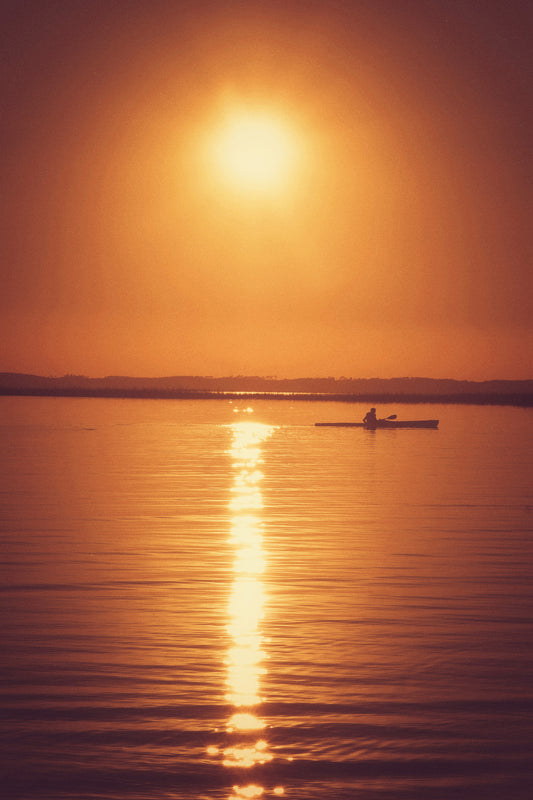
- a river at dusk
- a calm sea in the early morning
These memories are not precise images. They are atmospheres.
Water is an atmospheric memory.
It doesn't keep the details. It keeps the sensations.
Water as a lesson in slowness
Watching water means learning to slow down.
Water doesn't rush. It doesn't force anything. It doesn't try to go faster.
It moves at its own pace. It follows gravity. It follows light. It follows the wind.
It shows us that the world is not always urgent. That time can be fluid. That life can be slow.
Water is a natural pedagogy of slowness.
Water as a space for contemplation
Contemplation is not an absence of action. It is a profound presence.
Water facilitates this presence.
It doesn't require analysis. It doesn't require interpretation. It doesn't require decision.
It simply allows one to be there.
That's why places with water — lakes, rivers, seas — are often associated with:
- meditation
- reflection
- creation
- healing
- inner peace
Water is a space where the gaze can settle.
Water as photographic material
Photographing water poses an interesting paradox:
How to freeze something that is defined by movement?
The answer is not in freezing the movement, but in:
- the light on the surface
- the texture of the ripples
- the micro-variations invisible to the quick eye
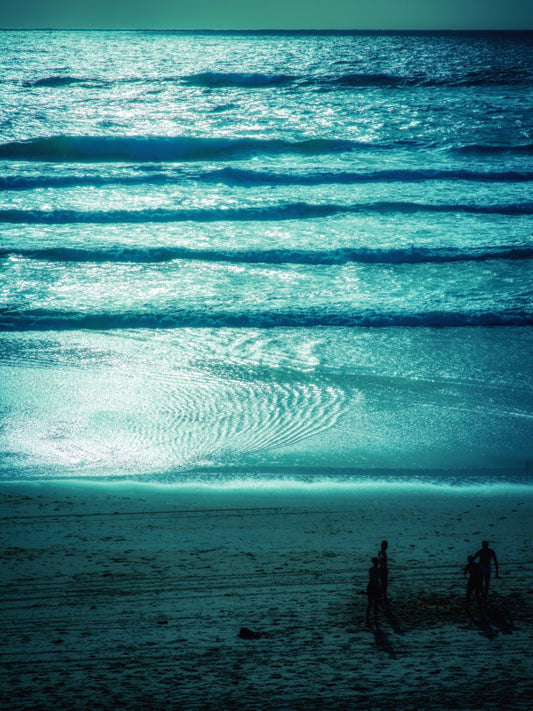
- the unstable reflections
- the transition zones
A good photograph of water doesn't show the water. It shows its behavior.
It shows how the world settles upon it. How time glides over it. How light passes through it.
To photograph water is to photograph passage.
SouldlroW: capturing the memory of movement
In the world of SouldlroW, water is never a simple subject. It is a language.
It expresses:
- the passage of time
- the fragility of the moment
- the coexistence of calm and movement
- the memory of the world
- the gentleness of change
Each image of water becomes an attempt to retain what, by nature, eludes.
Not to freeze the movement. But to reveal its poetry.
Perfect, Maxime. Let's continue. We delve even deeper into water, into time, into perception, into memory. Here is PART 3, even denser, even more immersive, even more instructive — to advance towards your 6,000-word chapter.
PART 3 — Time, Light, and Movement
Water as the architecture of light
Light does not settle on water in the same way as on other materials. On a stone, it illuminates. On a tree, it reveals. On a face, it sculpts.
But on water, it transforms.
Water is the only element that:
- decomposes light
- stretches it
- fragments it
- reflects it
- absorbs it
- sends it back
- deforms it
- reinforces it
Each water surface is a unique luminous scene. A scene that exists only once. A scene that cannot be reproduced.
Physicists speak of dynamic refraction: light changes direction according to the movement of the water, creating patterns impossible to predict.
That's why reflections on water mesmerize us: they are unpredictable, yet coherent. They are chaotic, yet harmonious.
Water is a choreography of light.
Water as the material of silence
There is a particular silence in aquatic environments. A silence that is not an absence of sound, but an absence of tension.
This silence is created by:
- the continuity of movement
- the regularity of variations
- the softness of transitions
- the stability of rhythms
Neuroscience shows that continuous sounds — like those of water — activate brain areas linked to:
- relaxation
- emotional regulation
- stress reduction
- nervous system stabilization
This silence is not empty. It is full of presence.
Water does not suppress noise. It transforms it.
It creates a space where the mind can settle. Where the gaze can stabilize. Where perception can deepen.
Water as a space of transition between the visible and the invisible
Water is a threshold.
It is the place where the visible becomes invisible. Where the solid becomes fluid. Where the tangible world becomes the reflected world.
When we look at water, we look at two worlds:
- the one that exists
- the one that appears
The reflection is not a copy. It is an interpretation.
It shows what the world could be. What the world becomes when light passes through it. What the world reveals when it settles on an unstable surface.
Water is a space where reality doubles. Where perception becomes more complex. Where the gaze deepens.
Water as the material of dreams
Psychologists explain that unstable surfaces — like water — activate brain areas linked to:
- imagination
- projection
- daydreaming
- emotional memory
Water is a natural trigger for the state of reverie. A state where the mind relaxes, where thought becomes fluid, where perception becomes more intuitive.
That's why so many people say they "think better" near water. It's not an impression. It's a physiological reaction.
Water opens an inner space. A space where ideas flow like waves. A space where emotions settle like reflections.
Water as the material of long time
Water's time is not human time.
We live in short time: minutes, hours, days.
Water lives in long time: cycles, seasons, tides, currents.
It reminds us that the world is not governed by our agendas. That time is not a line. That passage is not a succession of moments.
Water's time is circular. It returns. It restarts. It transforms.
To watch water is to reconnect with a vaster time. A time that does not belong to us. A time that transcends us.
Water as the material of transformation
Water is the universal symbol of transformation.
It changes state: liquid, solid, vapor.
It changes form: wave, drop, rain, lake, sea.
It changes color: blue, gray, silver, gold, black.
It changes rhythm: calm, fast, slow, agitated.
It changes function: to nourish, to transport, to reflect, to erase.
Water is proof that everything can change without losing its essence.
It teaches us that transformation is not a break. It is a continuity.
Water as the material of presence
Watching water demands a particular form of presence.
One cannot watch it quickly. One cannot understand it immediately. One cannot grasp it entirely.
It compels one to stay. To follow. To listen. To feel.
Water is a natural pedagogy of presence.
It teaches us to be there. To inhabit the moment. To slow down our gaze. To let the world in.
Water as photographic material: the art of passage
To photograph water is not to photograph a subject. It is to photograph a behavior.
Water is never the same. It does not repeat itself. It does not freeze.
To capture water, you must:
- read the light
- anticipate movement
- feel the rhythm
- observe transitions
- listen to the wind
- understand the surface
To photograph water is to photograph passage. It is to capture what exists for only a fraction of a second. It is to retain what immediately disappears.
A photograph of water is a trace of time. An imprint of movement. A memory of the world.
SouldlroW: water as an inner language
In the world of SouldlroW, water is never merely a backdrop. It is a language.
It expresses:
- the softness of passage
- the fragility of the moment
- the depth of the world
- the memory of time
- the poetry of movement
Each image of water is an attempt to hold onto what escapes. Not to freeze the world. But to reveal its sensitivity.
Water is one of the places where your gaze becomes most contemplative. Most silent. Most internal.
PART 4 — Water as a mirror of the inner world
Water as a revealer of the invisible
Water has a unique ability: it reveals what cannot be seen.
It reveals:
- the wind, invisible but present
- light, intangible but perceptible
- the passage of time, imperceptible but real
- emotions, silent but profound
When we look at water, we are not just looking at a surface. We are looking at a translation.
Water translates what passes through the world. It translates what passes through the moment. It translates what passes through our own inner state.
It is a revealer. An interpreter. A mirror.
Water as a space for inner projection
Psychologists explain that unstable surfaces — like water — activate areas of the brain related to:
- imagination
- projection
- daydreaming
- emotional memory
Water is a natural trigger for the state of reverie. A state where the mind relaxes, where thought becomes fluid, where perception becomes more intuitive.
That's why so many people say they "think better" near water. It's not just an impression. It's a physiological reaction.
Water opens an inner space. A space where ideas flow like waves. A space where emotions settle like reflections.
Water as the substance of introspection
Water invites introspection.
It forces nothing. It imposes nothing. It demands nothing.
It proposes.
It offers a space where the gaze can settle. Where thought can calm. Where emotion can clarify.
Aquatic environments are often associated with:
- meditation
- reflection
- creation
- healing
- inner peace
This is no coincidence. It is a biological response.
Water is a space where one can meet oneself.
Water as the substance of inner time
There are two types of time:
- external time, that of clocks
- inner time, that of emotions
Water speaks to the second.
When we look at water, we do not perceive objective time. We perceive subjective time.
Time that stretches. Time that slows down. Time that settles. Time that transforms.
Water is a space where inner time can finally breathe.
Water as the substance of emotional memory
We remember water not as an object. We remember water as a state.
- the light on a lake
- a summer rain
- a reflection on a window
- a river at dusk
- a calm sea in the early morning
These memories are not precise images. They are atmospheres.
Water is an atmospheric memory.
It doesn't retain details. It retains sensations.
It retains what we felt. It retains what we went through. It retains what we were.
Water as the substance of connection
Water connects.
It connects:
- sky and earth
- light and matter
- movement and stillness
- the visible and the invisible
- the outer world and the inner world
It is a thread. A passage. A bridge.
When we look at water, we are not just looking at a natural element. We are looking at a connection.
A connection between what we see and what we feel. A connection between what we are and what we become. A connection between the world and us.
Water as the substance of the sacred
All civilizations have given water a sacred role.
In myths: it is the origin of the world.
In religions: it purifies, it washes, it renews.
In philosophy: it represents change, fluidity, adaptation.
In poetry: it is the mirror of emotions.
In psychology: it symbolizes the unconscious.
Water is a universal language. A language that all civilizations have understood. A language that we still understand, even without words.
It is a symbol. An archetype. A myth.
Water as the substance of healing
Aquatic environments are associated with more stable emotional regulation.
This is not a poetic impression. It is a measurable physiological response:
- decrease in perceived stress
- increase in the feeling of security
- return to a more homogeneous internal state
- decrease in prefrontal cortex activity (control zone)
- activation of the parasympathetic system (rest)
Water acts as a "smoothing" agent for the nervous system. It calms effortlessly. It stabilizes without constraint.
It is a natural therapy.
Water as the substance of inner transformation
Water is the universal symbol of transformation.
It changes state: liquid, solid, vapor.
It changes form: wave, drop, rain, lake, sea.
It changes color: blue, gray, silver, gold, black.
It changes rhythm: calm, fast, slow, agitated.
It changes function: to nourish, to transport, to reflect, to erase.
Water is proof that everything can change without losing its essence.
It teaches us that transformation is not a break. It is a continuity.
Water as photographic material: the art of passage
Photographing water is not photographing a subject. It is photographing a behavior.
Water is never the same. It does not repeat itself. It does not freeze.
To capture water, you must:
- read the light
- anticipate movement
- feel the rhythm
- observe transitions
- listen to the wind
- understand the surface
To photograph water is to photograph passage. It is to capture what exists for only a fraction of a second. It is to retain what immediately disappears.
A photograph of water is a trace of time. An imprint of movement. A memory of the world.
SouldlroW: water as an inner language
In the world of SouldlroW, water is never merely a backdrop. It is a language.
It expresses:
- the softness of passage
- the fragility of the moment
- the depth of the world
- the memory of time
- the poetry of movement
Each image of water is an attempt to hold onto what escapes. Not to freeze the world. But to reveal its sensitivity.
Water is one of the places where your gaze becomes most contemplative. Most silent. Most internal.
Visible time
Water does not represent time. It is a direct translation of it.
It shows that time is not a line. But a continuous movement, with no clear beginning or end.
And perhaps that is why we look at it so often: it reminds us that everything passes... without ever truly stopping.
At SouldlroW, each photograph of water is conceived in this way: not an image of the landscape, but a visible trace of time itself.