Chapter V — The Forgetting of Silence
Maxime GuengantWhen silence no longer speaks
There is a strange paradox in our time. We still have access to quiet moments — still rooms, gentle mornings, lights that do not hurry. Silence exists. It has never disappeared.
And yet, it no longer produces the same effect.
As if something within us has forgotten how to hear it. As if silence has lost its ability to touch us.
This chapter talks about this loss: not the disappearance of silence, but the forgetting of silence.
Silence has not disappeared, it has faded from our perception
It is often said that the world has become noisy. But this is not entirely true.
Silence still exists: in an empty room, in a still landscape, in the morning light, in slow breathing.
What has changed is not its presence. It is our ability to recognize it.
Neuroscience shows that the brain filters stimuli according to what it considers "normal." And what is normal today is flux. Movement. Stimulation.
Silence is no longer a natural state. It has become an event.
The modern mind has been conditioned to flux
The human brain is an organ of adaptation. It models itself according to what it receives.
By being exposed to continuous environments:
- sounds
- images
- information
- solicitations
it has learned to function in permanent motion.
What no longer moves becomes strange. What no longer stimulates becomes unusual. What no longer fills becomes uncomfortable.
We have not become unable to hear silence. We have become accustomed to not hearing it anymore.
Silence as a lack of reference points
In a saturated environment, silence is not perceived as a natural state. It is perceived as a break.
An interruption. A void to be filled.
Silence no longer immediately reassures. It questions. It exposes. It reveals.
Psychologists speak of perceptual disorientation: when the brain loses its usual reference points, it seeks to recreate them.
Silence then becomes a space to be filled, rather than a space to inhabit.
The discomfort of sonic emptiness
Silence can produce a slight discomfort. Not because it is negative, but because it removes the usual anchor points.
Without sounds, without flux:
- thoughts become more visible
- emotions rise to the surface
- time seems more present
- perception becomes more direct
It is not silence that disturbs. It is what it reveals.
Silence is a mirror. And we have lost the habit of looking into it.
Silence is not an absence of stimulation
Contrary to a simple idea, silence is not a sensory void. It is a change in perceptive regime.
We move:
- from fragmented to continuous
- from fast to slow
- from external to internal
This transition is not neutral. It requires an inner reorganization.
Neuroscience shows that silence activates brain areas related to:
- emotional memory
- stress regulation
- creativity
- fine perception
Silence is not a lack. It is a subtle activation.
The gradual forgetting of silence
By no longer being confronted with true moments of silence, something has shifted.
We have begun to:
- automatically fill empty spaces
- avoid prolonged pauses
- seek constant background noise
- associate silence with boredom
- confuse stimulation with presence
Even moments of rest are often accompanied by: music, videos, podcasts, screens, notifications.
Silence has not disappeared around us. It has disappeared within us.
Silence as an inner mirror
Silence shows nothing. And that is precisely why it is powerful.
It does not project. It does not distract. It does not divert.
It reflects.
It reflects back to:
- our deep thoughts
- our unfiltered emotions
- our subtle sensations
- our inner rhythm
In a world saturated with externality, this return to oneself can be unusual. Sometimes even disconcerting.
But it is in this mirror that perception reorganizes itself.
Why we stopped inhabiting silence
Silence requires a particular availability. A form of presence without stimulation.
But this availability has been weakened by:
- speed
- fragmentation
- over-information
- constant solicitation
- the habit of mental noise
So silence has become rare not around us… but within us.
We have not lost silence. We have lost the ability to inhabit it.
Silence and the perception of time
In silence, time changes its nature. It does not disappear. It stretches.
Without external flux to rhythm it, time becomes more visible. Denser. Slower.
Neuroscience shows that silence increases the subjective perception of time. It is not an illusion. It is a reactivation.
Silence makes time habitable. Noise makes it invisible.
Silence as a condition for fine perception
There is a direct relationship between silence and quality of perception.
The more silence is present:
- the more details become visible
- the more nuances appear
- the more sensations stabilize
- the more emotional depth unfolds
Silence is not the absence of the world. It is the condition for perceiving it fully.
Without silence, perception remains on the surface. With silence, it becomes profound.
Nature as a space for relearning
Certain environments allow us to rediscover this quality of silence. Not just audibly. But perceptively.
Nature is one of them.
In these spaces:
- elements are spaced out
- rhythms are slow
- transitions are gentle
- sounds are continuous but not aggressive
- light varies without abruptness
- forms do not saturate
The gaze ceases to defend itself. It can finally open up.
Nature does not teach silence. It reminds us of it.
Photography as visible silence
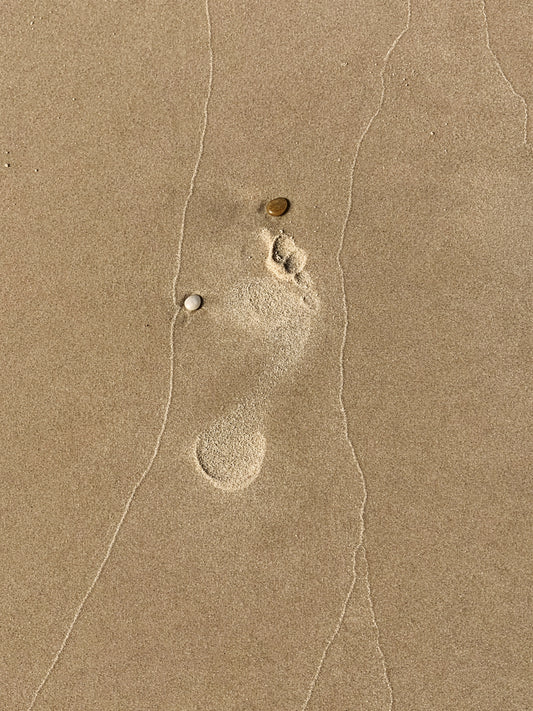
Contemplative photography can produce a similar effect.
It captures not an action, but an absence of agitation. It makes visible:
- stillness
- stable light
- spaces without tension
- simple forms
- soft details
It does not show silence. It contains it.
Contemplative photography is a space where the gaze can rest. A space where the world stops making noise.
SouldlroW: rediscovering the memory of silence
SouldlroW images do not seek to fill a space. They seek to restore one.
A space where:
- the gaze slows down
- thought calms down
- perception stabilizes
- time stretches
- presence returns
They do not speak loudly. They speak slowly.
They do not seek to impress. They seek to soothe.
They do not show silence. They awaken it.
Silence is not lost, it is forgotten
Silence has never disappeared from the world. It has simply ceased to be recognized.
And like anything no longer recognized, it eventually seems absent.
But sometimes, all it takes is a moment. A light. A landscape. An image.
To remember that it has always been there.
At SouldlroW, each photograph is conceived this way: not an image to look at, but a silence to rediscover.
👉 Explore contemplative works
SouldlroW / Fine Art Prints Collection